
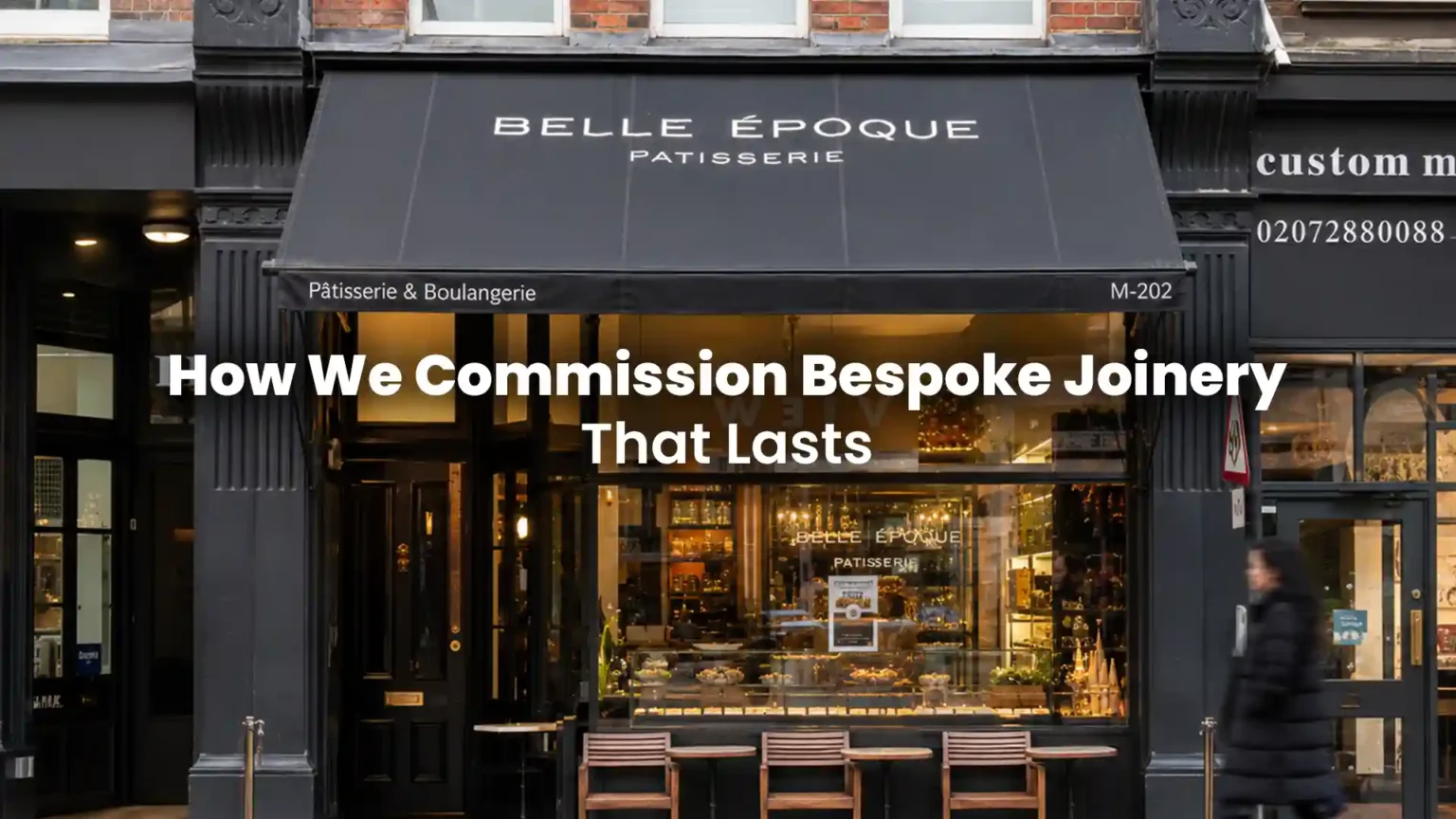
Very few rooms in London are square. Floors settle, chimney breasts intrude, ceilings step down where a Victorian builder made an allowance nobody recorded, and standard units leave a trail of filler strips and awkward gaps behind them. That is the practical reason so many owners, architects and developers turn to made-to-measure timber work, and why bespoke joinery tends to be judged on millimetres rather than mood boards.
Where the process actually begins
A project like this usually begins long before anything is cut. The first stage is a measured survey of the space as built, not as drawn, followed by shop drawings that record every dimension, junction, material, finish and item of ironmongery. Those drawings are reviewed by the client and, where one is appointed, the architect. Nothing reaches the workshop until that information has been approved, because a change agreed on paper costs a few minutes and the same change agreed after manufacture costs a fortnight.
This is also the stage at which services are resolved. Sockets, switches, lighting, extract routes and structural fixings all have to be agreed before manufacture, particularly in rooms where the joinery conceals them.
What is usually commissioned
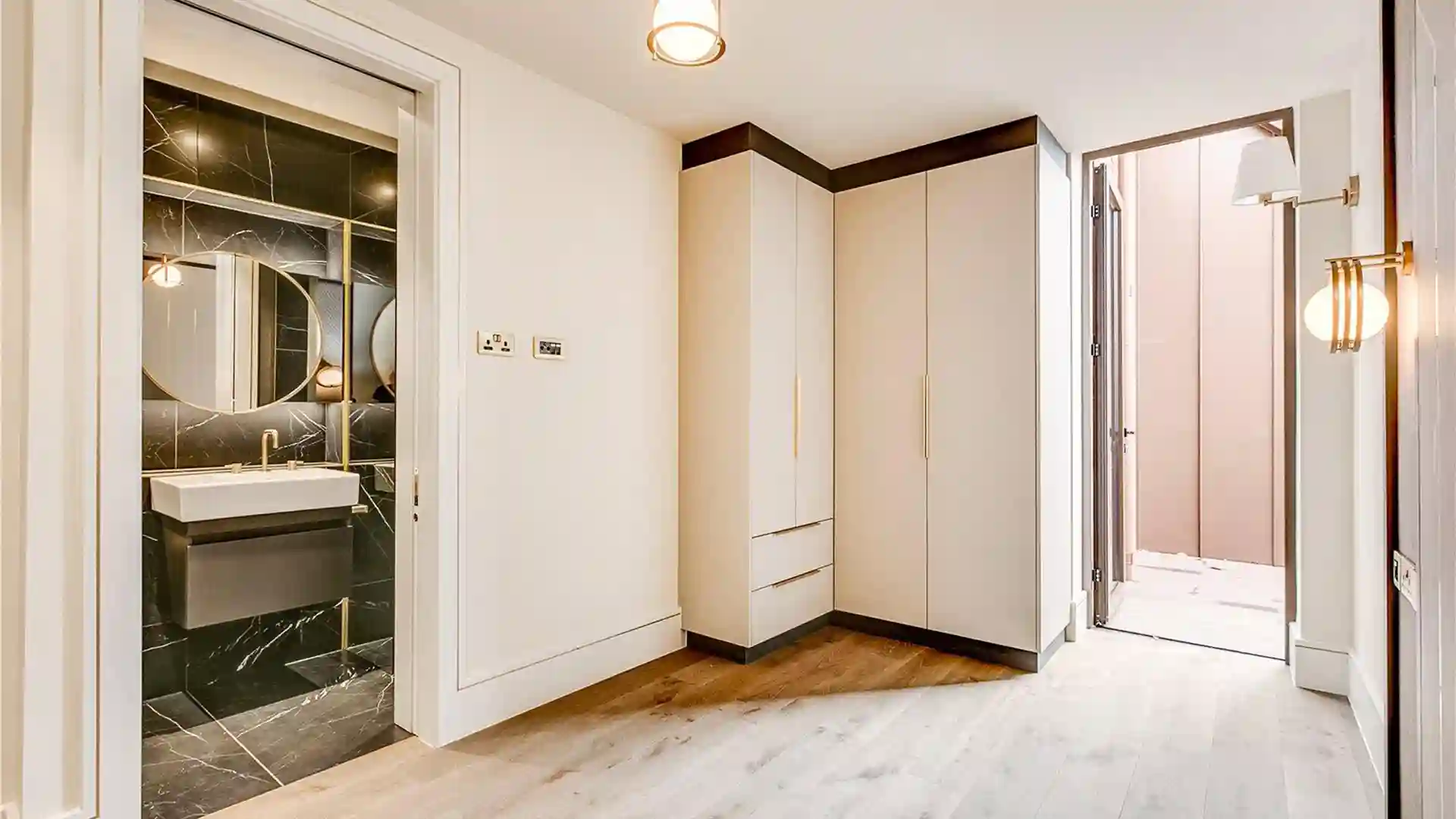
Commissions tend to fall into three broad groups. The first is fitted cabinetry for homes: wardrobes, media walls, libraries, boot rooms and kitchen furniture designed around the exact geometry of the property. The second is free-standing work, from dining tables to reception desks, made to match a wider interior scheme. The third is commercial: shop fittings, display units, bars, counters and office installations produced to a fixed opening date.
The distinction matters commercially. Domestic fitted cabinetry is usually driven by the quality of the finish and the fit; commercial shop fittings and office installations are driven equally by programme, durability and the ability to work around a landlord’s access restrictions.
Materials and why they are chosen
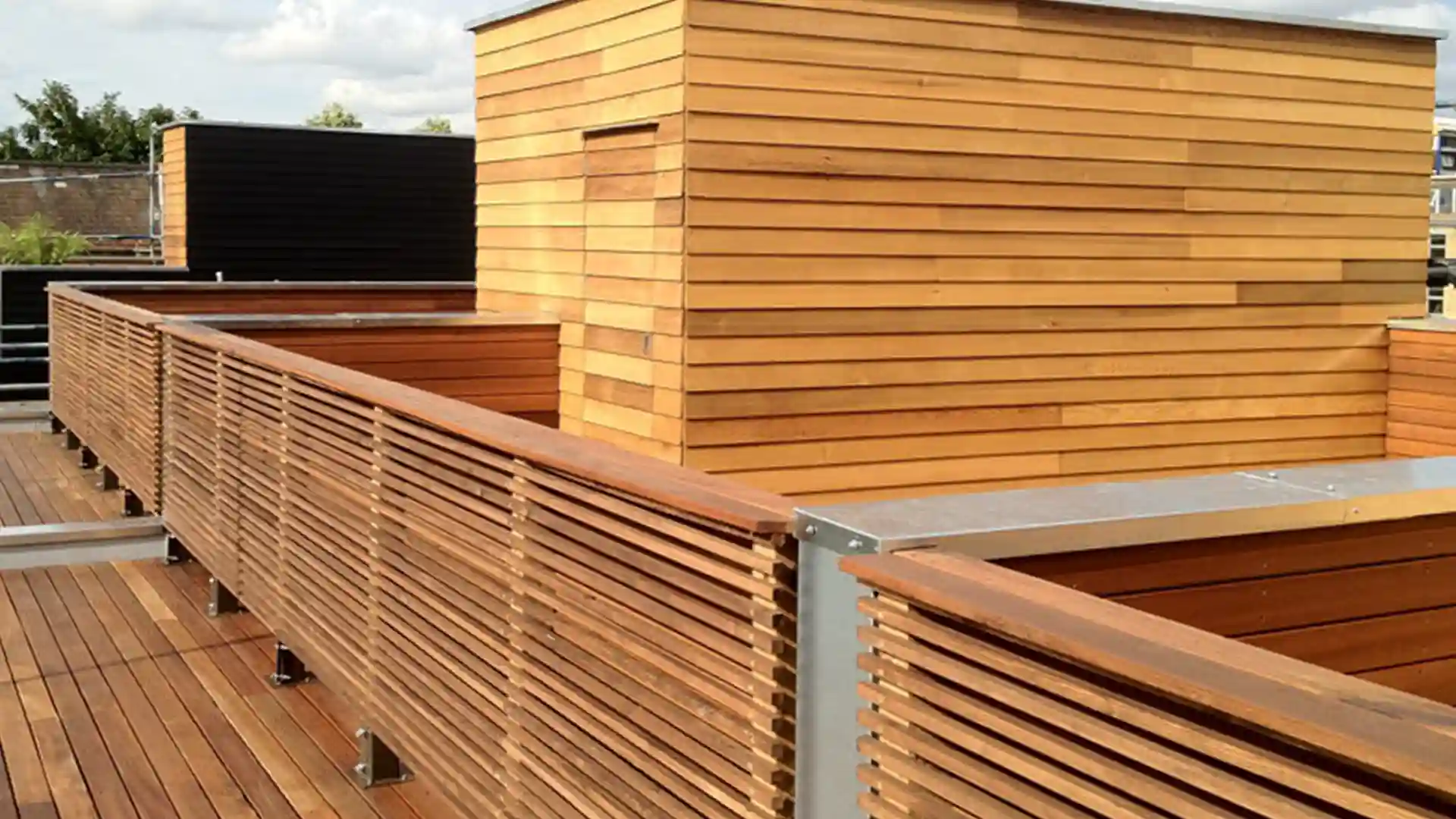
The materials should suit the building rather than the trend of the season. In period properties, timber species, mouldings and panel proportions are matched to what already exists. In contemporary interiors there is more freedom, and this is where character timbers do their best work. Reclaimed Iroko is a good example: dense, stable, naturally durable and marked by the life it has already had. Using it also gives good material a second life instead of sending it for disposal, which increasingly matters to clients who are asked to account for the environmental impact of their projects.
Finishing is not an afterthought
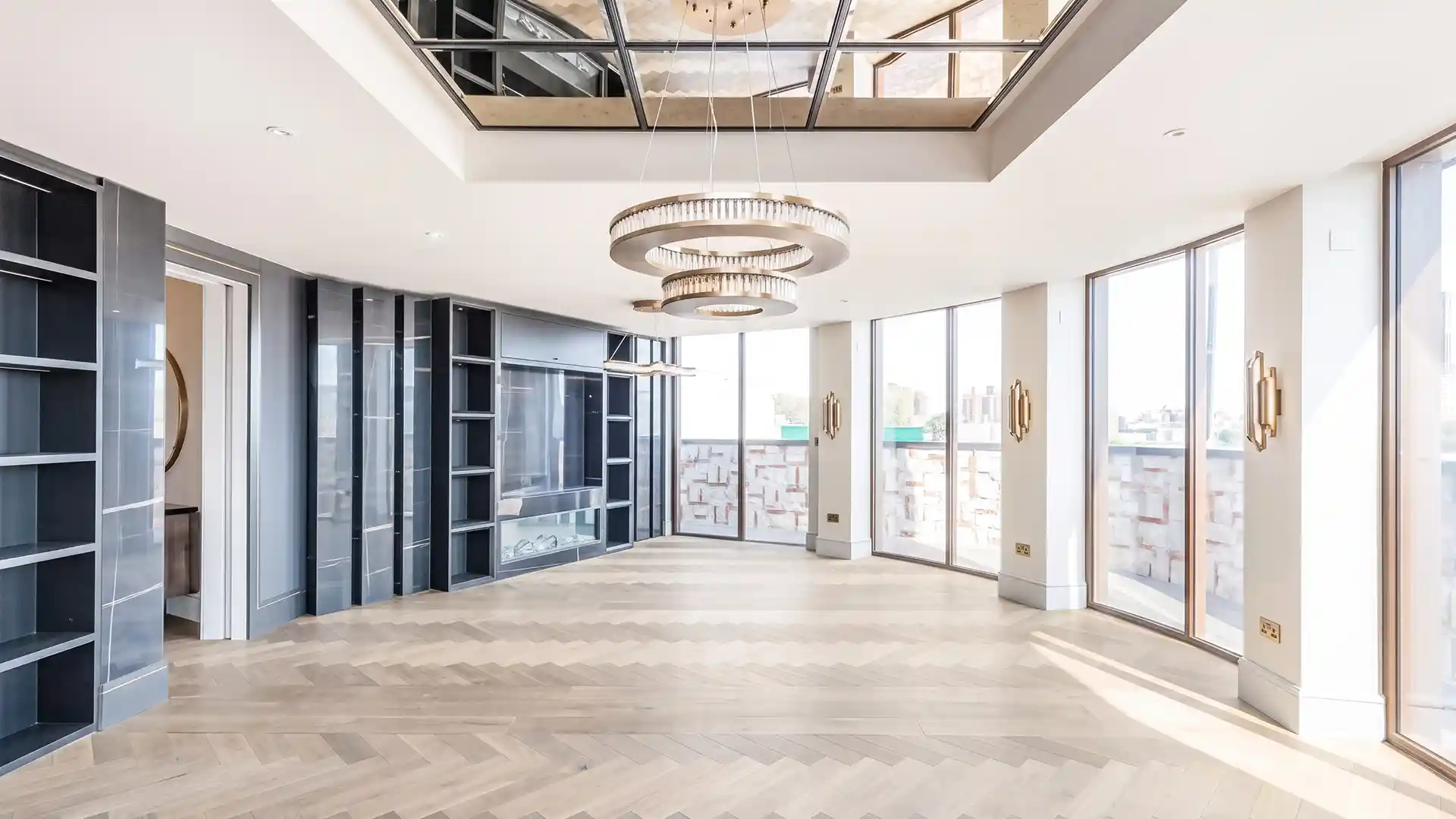
A cabinet is only as good as its surface. Work finished on site is exposed to dust, temperature swings and other trades; work finished under controlled conditions is not. A dedicated spray shop allows lacquers, stains and paint systems to be applied evenly and cured properly, in the exact colour specified. Because our spray shop sits alongside the bench area, items are sprayed the moment they are ready rather than waiting for a subcontractor’s diary to allow it.
Programme: the part people underestimate
Programme is the aspect clients underestimate most often. Between survey, drawing approval, material procurement, manufacture, finishing and installation, a substantial package rarely takes less than eight to twelve weeks, and veneers, stone tops and specialist ironmongery can extend that. On a construction project, joinery frequently sits on the critical path, which is why procurement dates should be fixed at the outset rather than negotiated later.
Installation itself needs planning too, and it is where projects are quietly won or lost. Access, lift dimensions, staircase turns and door openings all influence how components are broken down, and a piece that cannot reach its final position is not a design detail but a delivery failure.
Choosing who makes it
Choosing who makes it comes down to three straightforward questions: is the work made in-house, or bought in and badged? Can you visit the workshop and see current work on the bench? And is there a single point of contact who will still be there at installation?
At Solmaz, our joinery and carpentry unit has produced work of this kind since 2003, from hand-crafted furniture for private homes to complete fits for restaurants, showrooms and commercial offices. If you are planning a scheme and want an honest view of what is achievable within your budget and programme, we are happy to discuss it.